Zapier vs. MuleSoft: Which Automation Platform is Right for You?
Comparing Zapier and MuleSoft for enterprise automation. Analyze features, use cases, and scalability to find the perfect integration solution.
8 min read
Choosing the right integration and automation platform is a critical decision for any business aiming to streamline operations, enhance efficiency, and unlock new levels of productivity. In the crowded landscape of automation tools, two names frequently surface: Zapier and MuleSoft. While both aim to connect disparate applications, their approaches, target audiences, and underlying philosophies are vastly different. This deep dive will dissect Zapier and MuleSoft, providing a clear comparison to help you determine which platform best aligns with your organization's unique needs and strategic goals in 2026.
The Core Philosophies: Ease vs. Power
At their heart, Zapier and MuleSoft represent two distinct philosophies in the world of automation.
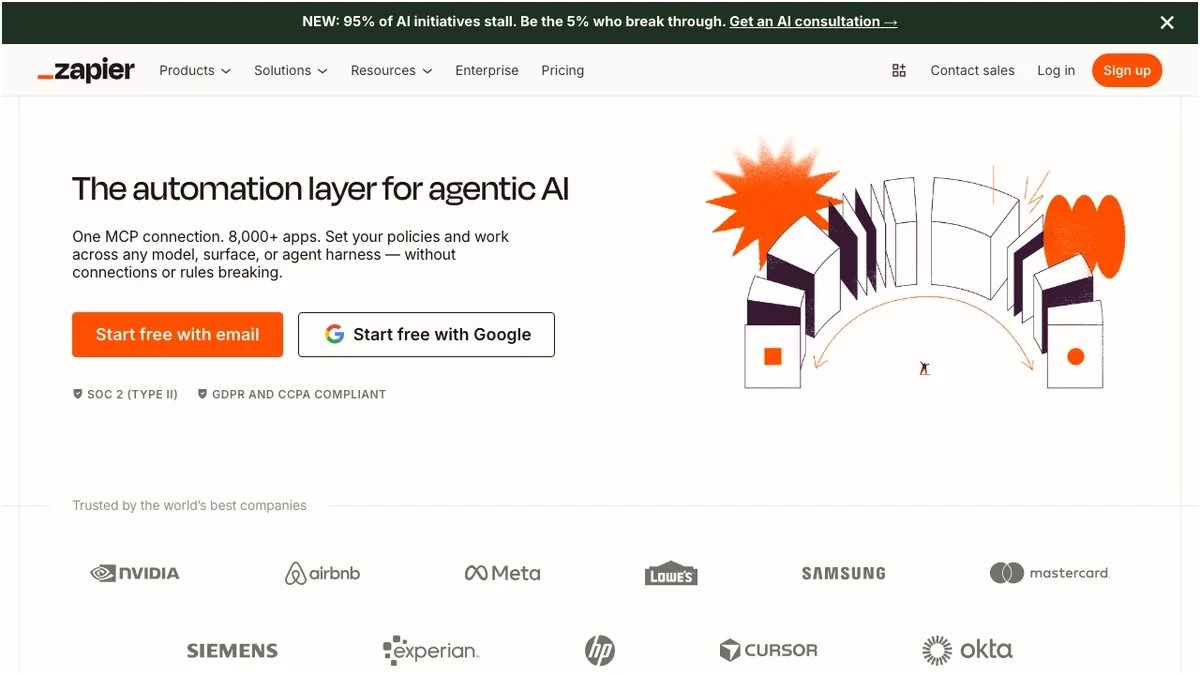
Zapier champions accessibility and speed. It's designed for a broad audience, including non-technical users, empowering them to build automated workflows (called "Zaps") with a visual, no-code interface. The emphasis is on connecting a vast array of SaaS applications quickly and efficiently, enabling rapid iteration and problem-solving. Zapier's recent advancements in AI, such as Zapier Copilot, further solidify its commitment to democratizing automation.
MuleSoft, on the other hand, is built for enterprise-grade complexity and developer-centric control. It leverages an API-led connectivity approach, providing a robust framework for managing intricate integrations across large organizations. MuleSoft is the go-to for businesses requiring deep customization, stringent security, and the ability to orchestrate complex systems, often involving legacy applications and custom-built enterprise software. Its recent introduction of AI tools like Einstein AI and Vibes coding assistant signals an effort to blend developer power with intelligent assistance.
Feature Deep Dive: What Can They Actually Do?
The feature sets of Zapier and MuleSoft reflect their core philosophies. While Zapier excels in breadth and ease of use, MuleSoft offers depth and unparalleled flexibility for complex scenarios.
| Feature | Zapier | MuleSoft |
|---|---|---|
| User Interface | Visual builder, templates, AI Copilot for non-technical users. | Developer-focused IDE, Anypoint Studio, Composer for citizen developers. |
| App Connectivity | Connects to 17x more apps, broad SaaS ecosystem, webhooks, generic API. | Strong for Salesforce and enterprise systems, API-led architecture, extensive connectors for core business applications. |
| Implementation Speed | Minutes to hours for simple to moderately complex workflows, multi-step Zaps, branching, conditions. | Weeks to months for complex integrations, structured mapping, transformations, requires significant developer effort. |
| AI Capabilities | Holistic AI orchestration: Copilot, Chatbots, Agents, 500+ AI apps. | Einstein AI, Vibes for coding, Agent Fabric, intelligent document processing. |
| Scalability & Infrastructure | Pay-as-you-scale, no infrastructure management required. | Managed by the enterprise, requires significant infrastructure planning and maintenance. |
| Security & Compliance | Standard security protocols, suitable for many business needs. | Enterprise-grade security, strict compliance, governance for large-scale deployments. |
Zapier's strength lies in its vast library of integrations, making it incredibly easy to connect popular SaaS tools like Slack, Google Workspace, Trello, and countless others. Its visual builder and AI Copilot allow even those without coding experience to create sophisticated automations. Multi-step Zaps, branching logic, and conditional steps provide a good degree of complexity for many use cases.
MuleSoft, powered by its Anypoint Platform, takes a more structured and developer-centric approach. Its API-led connectivity model is designed to build reusable APIs that can be orchestrated into complex business processes. This is particularly powerful for integrating core enterprise systems, managing data flows between different departments, and ensuring robust governance and security. While MuleSoft Composer offers a more accessible interface for certain tasks, its core power is unleashed by experienced developers.
Pricing: A Tale of Two Tiers
The pricing models of Zapier and MuleSoft are perhaps the most significant differentiator, directly reflecting their target markets.
Zapier's pricing is designed to be accessible and scalable, starting with a generous free tier and offering tiered plans based on task volume and features. This "pay-as-you-grow" model makes it an attractive option for individuals, small teams, and growing businesses.
- Free: 100 tasks/month, includes Zapier Copilot.
- Professional: $29.99/month (or $19.99/month as per some sources), 750 tasks, multi-step Zaps, webhooks, AI fields.
- Team: $103.50/month (or $69/month as per some sources), 2,000 tasks, shared Zaps, SAML SSO, premier support.
- Enterprise: Custom pricing, technical account managers.
MuleSoft's pricing is firmly in the enterprise realm. There are no fixed plans; instead, it involves custom, often six or seven-figure licensing fees, plus ongoing developer and platform expenses. This reflects the significant investment required for implementation, customization, and ongoing management of complex enterprise integrations. A 30-day trial is available to explore its capabilities.
Zapier — Pricing Plans
Prices verified Sep 20, 2026 against the official pricing page · Zapier price history
Pros and Cons: Weighing the Options
Understanding the strengths and weaknesses of each platform is crucial for making an informed decision.
Recent Developments: Staying Ahead in 2026
The automation landscape is constantly evolving, and both Zapier and MuleSoft have been active in enhancing their platforms. As of early 2026, Zapier has significantly bolstered its AI capabilities, introducing advanced features like Zapier Copilot, Chatbots, and Agents, alongside an ever-expanding ecosystem of over 500 AI-powered applications. This focus on intelligent automation makes it even more potent for a wider range of tasks.
MuleSoft, while maintaining its enterprise focus, has also introduced features aimed at improving developer productivity and accessibility. The inclusion of Einstein AI, the Vibes coding tool, and the Agent Fabric for orchestration are key developments. The availability of a 30-day trial also makes it easier for potential enterprise clients to evaluate the platform.
Frequently Asked Questions
Frequently Asked Questions
Verdict: Which Tool is Right for You?
The choice between Zapier and MuleSoft is not about which tool is "better" in an absolute sense, but rather which tool is better suited to your specific organizational context, technical capabilities, and strategic objectives.
In essence, if you're looking to quickly connect your favorite apps, automate repetitive tasks without a steep learning curve, and leverage AI for enhanced productivity, Zapier is likely your champion. Its affordability, ease of use, and vast app ecosystem make it an indispensable tool for individuals and businesses of all sizes.
However, if your organization operates at an enterprise scale, deals with intricate system architectures, requires stringent security and compliance, and has the development resources to match, MuleSoft offers the power, flexibility, and control necessary to build and manage those complex integrations. It's the robust backbone for enterprise-level digital transformation.
Try These Tools
Try Zapier free